

What to Say (and Not Say) to Your Children about Divorce
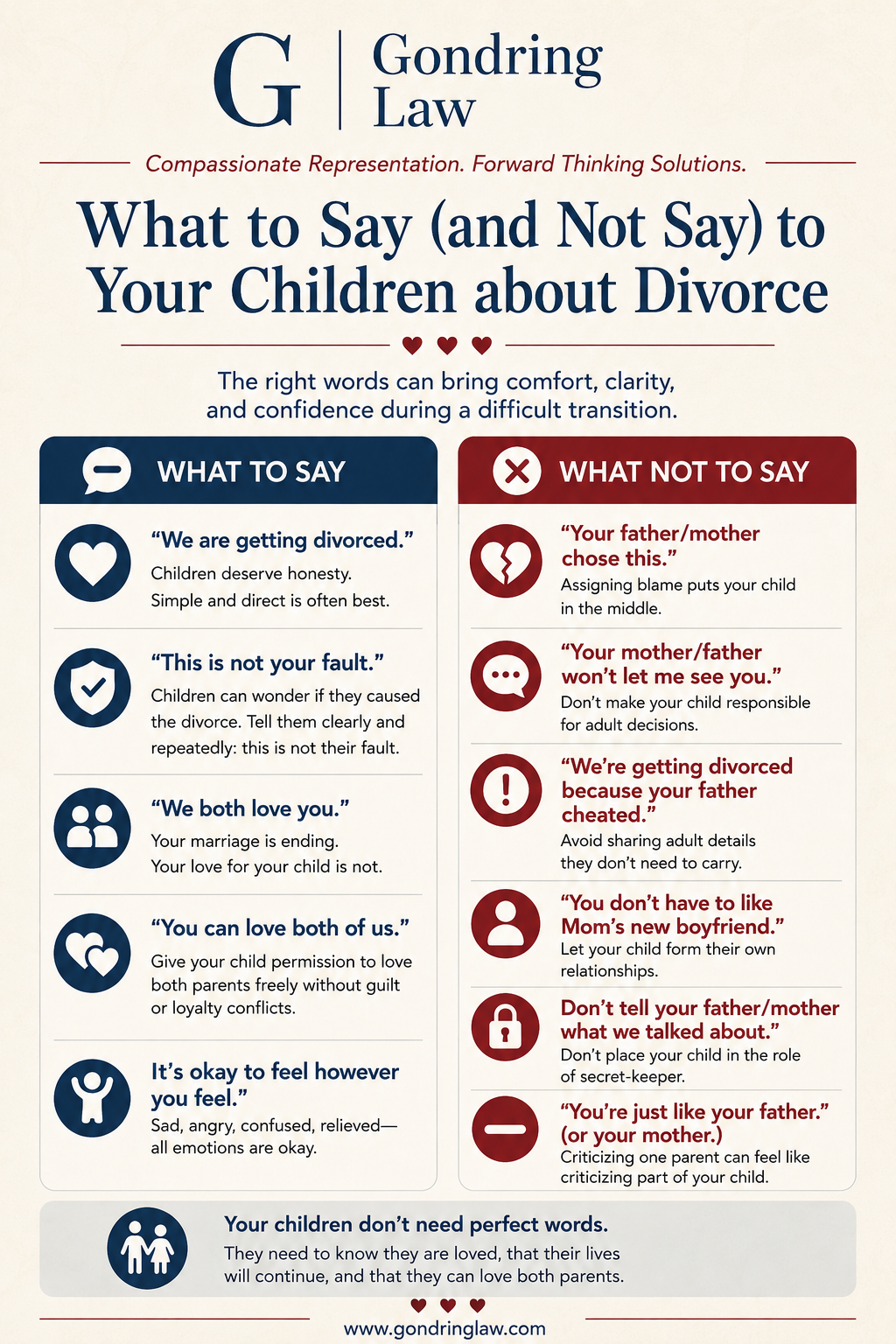
Clients come to us at all different stages of separation. Some have been living separately for months and have already begun figuring out the logistics of two homes, new routines, and parenting schedules. Others are sitting in our office very early in the process, sometimes before they have even told their children that anything is changing. One of the first questions we often hear from those parents is also one of the hardest: What do I say to my children?
Usually, the question is carrying much more weight than the words themselves suggest. These parents know that what is said, and how it is said, will be a BIG conversation – one that has the potential to stay with their children for years to come. Parents want to get this right and to ensure that their children are going to be okay (they are going to be okay).
It is understandable, then, that parents often look for a script. They search online for exactly what to say, read books about talking to children about divorce, or ask their friends what worked for their families.
There is certainly value in preparing for the conversation. But there is no one-size-fits-all script for telling a child that their parents are separating. What you say should depend on your children, their ages and personalities, what they already understand, the circumstances of your separation, and what you and the other parent are prepared to say together.
Rather than looking for the perfect words, I encourage parents to develop their own script. Think about what your children need to hear from you specifically. What do they need to know right now? What questions are they likely to ask? What information belongs in this first conversation, and what can wait? Most importantly, what do you want your children to feel when the conversation is over? I imagine things like safe and loved are at the top of the list.
Preparation allows parents to work through some of their own difficult emotions before sitting down with their children. It gives parents an opportunity to think carefully about what is appropriate to share and what is better left between the adults.
If you are not sure where to begin, consider meeting with a reputable coparenting counselor before having the conversation. A good counselor can help you think through how to approach your particular children and can help parents get on the same page about what to say. Reading a good book can help, too. We previously wrote about The Truth About Children and Divorce and the valuable guidance it offers parents navigating these conversations; that post is worth revisiting if you are looking for a place to start.
There are also some things children generally should not be asked to carry. They do not need to know every detail about why the marriage ended. They should not be asked to take sides, keep secrets, deliver messages between parents, or reassure a parent who is struggling. And even when there are very real reasons for the separation, children should not be placed in the position of deciding which parent is right or wrong. Those are adult issues, and protecting children from that burden is one of the most important gifts parents can give them during this transition.
The practical guidance above offers some specific examples of what children may need to hear—and what is better left unsaid. But remember that the goal is not to memorize the right words. The goal is to have a thoughtful conversation that feels authentic to your family and leaves your children knowing this:
While their parents' marriage may be changing, they are still loved; they are not responsible for the change; and, they do not have to choose between the people they love.
If you are at the beginning of a separation and feeling overwhelmed by the thought of telling your children, you do not have to figure it out all at once. There are good professionals, good resources, and good ways to approach this conversation thoughtfully.
We’re here, too, every step of the way.